


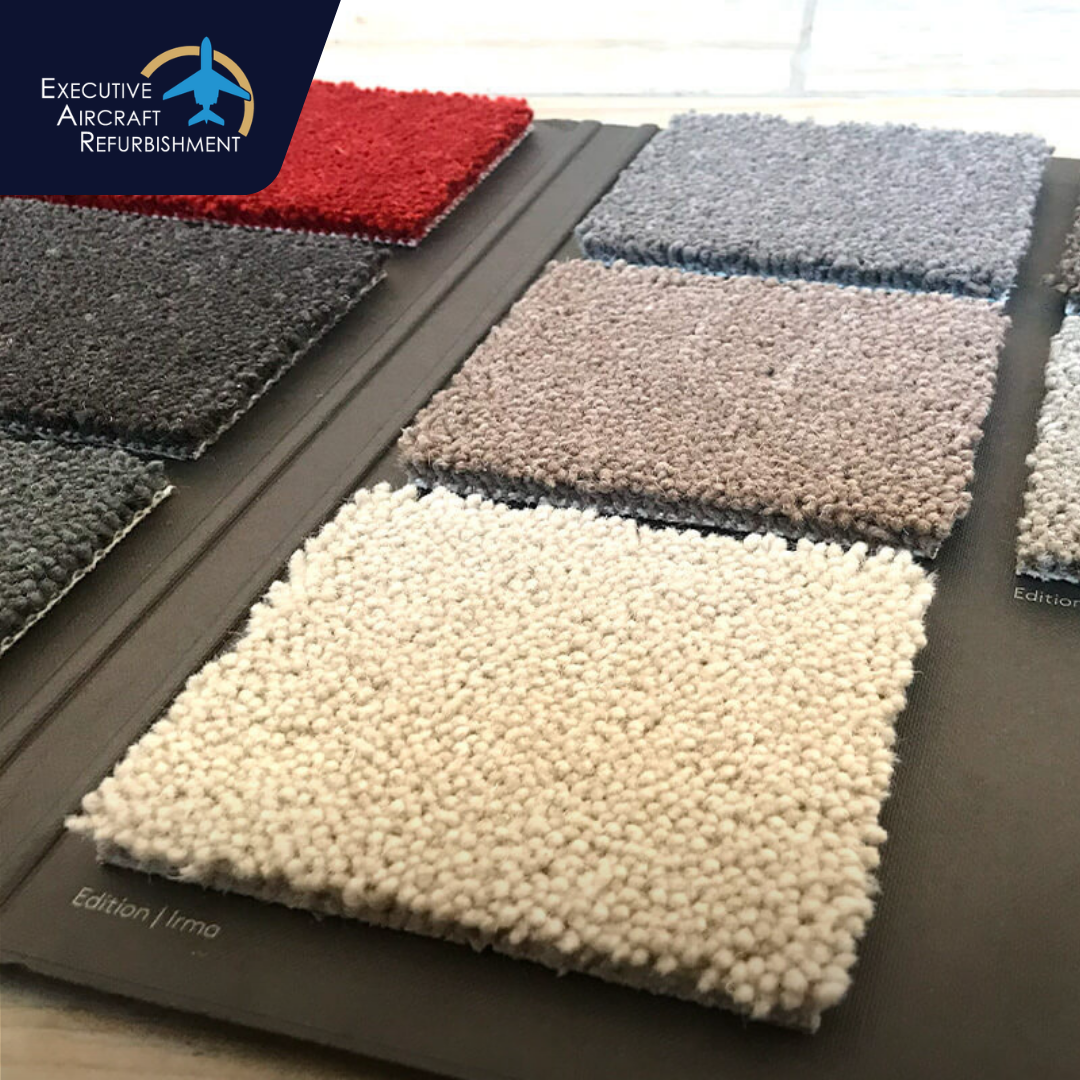
Let’s face it, when it comes to the aesthetic value of your aircraft, every detail contributes to the overall sense of luxury, comfort, and performance. Among these details, carpets often play a more important role than one might expect. Beyond aesthetics, they influence sound absorption, insulation, passenger comfort, and even the aircraft’s value. For discerning aircraft owners and operators, wool carpets remain the preferred choice.
In this article, we’ll explore why wool is the gold standard for aviation interiors, what factors to consider when installing wool carpets, the timeframe for installation, and which types of wool are best suited for executive aircraft.
Why Choose Wool Carpets for Aircraft?
Wool has been used for centuries in premium interiors – from stately homes to luxury vehicles – and for good reason. In aviation, wool carpets offer unique benefits that synthetic alternatives often struggle to match:
Natural luxury and comfort – Wool fibres are soft underfoot yet resilient, offering passengers a sense of quiet luxury the moment they step into the cabin.
Durability and longevity – High-quality wool withstands heavy foot traffic, resists flattening, and naturally springs back into shape. This makes it ideal for aisles and frequently used cabin spaces.
Fire resistance – Wool is naturally flame-retardant without the need for additional chemical treatment, making it especially valuable in aviation where stringent safety standards are paramount.
Acoustic benefits – Wool absorbs sound more effectively than most man-made fibres, reducing cabin noise and contributing to a calmer environment for passengers.
Sustainability – As a renewable, biodegradable material, wool offers a more environmentally responsible option, aligning with the growing emphasis on sustainability in aviation.
What to Consider Before Installation
Every executive aircraft refurbishment project is unique, and carpet installation must be approached with precision. Here are key factors to consider:
Weight considerations – While wool is relatively lightweight compared to some luxury flooring options, it’s still vital to strike a balance between opulence and efficiency. Weight directly impacts fuel consumption, so carpet specifications are carefully calculated.
Design and customisation – Carpets can be fully customised to complement the aircraft’s interior palette. Patterns, colours, and pile thickness should harmonise with seating, sidewalls, and veneers.
Compliance with aviation regulations – Carpets used in aircraft must meet certification requirements, including flammability testing and adherence to international aviation standards. Working with an experienced refurbishment team ensures these regulations are properly met.
Maintenance and cleaning – Wool is naturally stain-resistant to a degree, thanks to the structure of its fibres, but ease of maintenance is still a crucial factor in material selection and finish.
Installation environment – Aircraft cabins are complex spaces with curved walls, irregular corners, and multiple fittings. Carpets are not simply rolled out and cut to shape; they require precision templating, edging, and expert fitting to achieve a seamless finish.
How Long Does Installation Take?
The timeframe for installing wool carpets in an aircraft depends on the aircraft’s size and the complexity of the design. Generally, for a mid-sized executive jet, the process may take anywhere from three to seven days.
The process typically involves:
Removal of existing carpet – Careful extraction to prevent damage to cabin fixtures.
Preparation and templating – Creating precise templates for each section of the cabin.
Cutting and edging – Carpets are cut to exact measurements and bound with durable edging.
Installation and fitting – Each piece is laid with precision, ensuring seamless joints and a snug fit around seats, panels, and cabin equipment.
Delays can occur if custom dyeing or weaving is required, but the result is a finish tailored precisely to the owner’s preferences.
What Type of Wool is Best?
Not all wool is created equal. For aircraft, the most desirable wool is 100% pure, long-fibre wool, sourced from breeds known for their fine, resilient fibres such as Merino. Long fibres offer greater resistance to pilling and wear, making them ideal for the demands of aviation.
Blended wools (wool mixed with nylon or other fibres) are also an option. These can provide a balance between durability and cost, though many owners of executive aircraft prefer pure wool for its unmatched luxury and prestige.
Additionally, pile height and density are important. A lower, denser pile will offer excellent wear resistance in aisles, while plush pile can be reserved for VIP seating areas where passenger comfort takes precedence.
Why Executive Aircraft Refurbishment South Africa?
At Executive Aircraft Refurbishment South Africa, we combine craftsmanship, technical expertise, and a passion for aviation luxury to deliver flawless wool carpet installations. Our team ensures that every detail – from weight balance to aesthetic design – is tailored to your aircraft and your preferences.
Choosing wool isn’t just about flooring; it’s about enhancing the passenger experience, elevating cabin comfort, and investing in a material that blends timeless elegance with aviation performance.
Wool carpets are more than just a decorative feature – they’re a statement of quality, safety, and sophistication. For aircraft owners who want interiors that reflect luxury and durability while meeting the highest safety standards, wool remains the ultimate choice. With expert installation, your aircraft can achieve the perfect blend of comfort and refinement that passengers will appreciate on every journey. Contact us today for a quote.


