


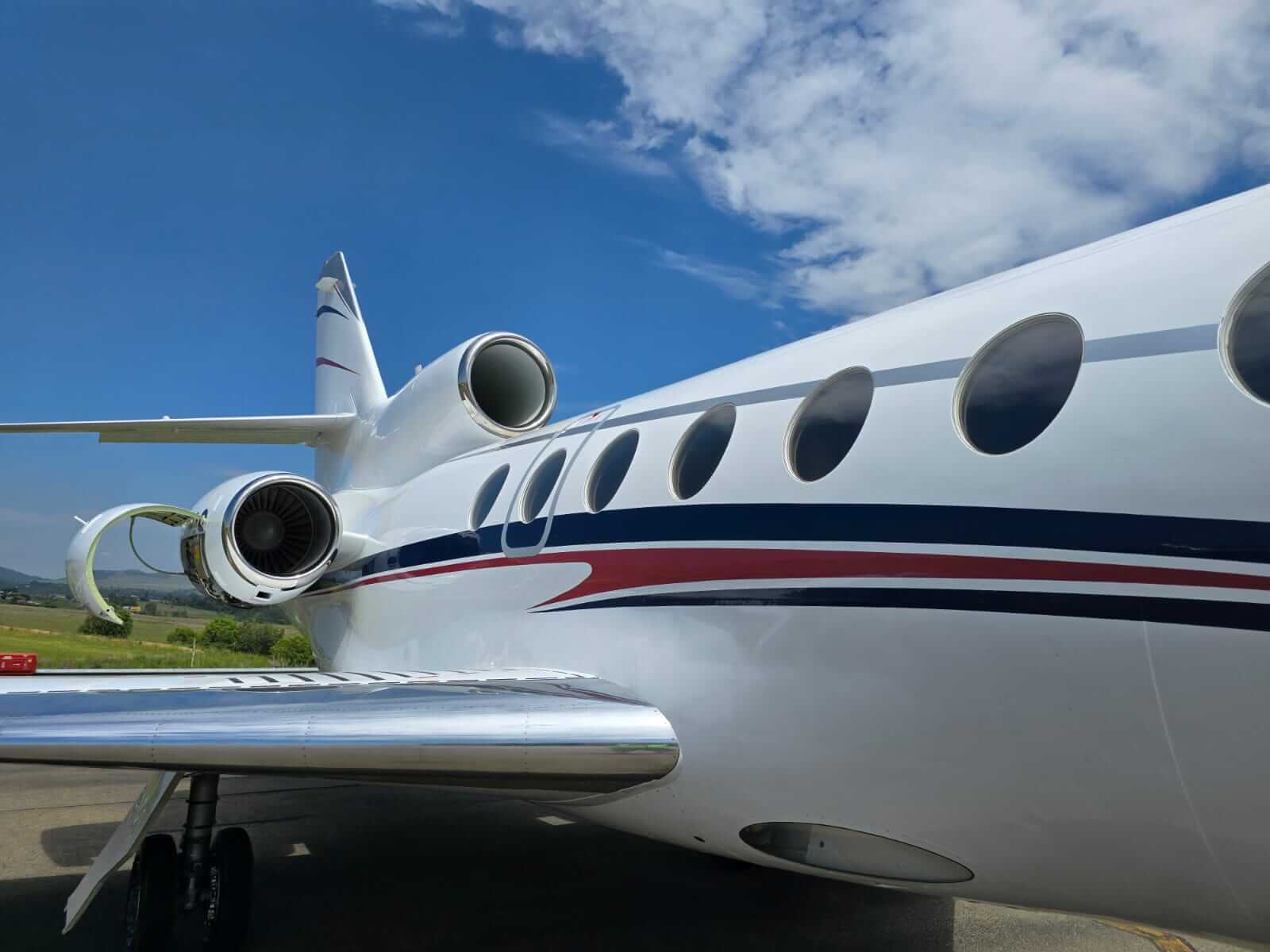
When you see a freshly painted aircraft glistening on the apron, it’s the top coat that captures your attention, the shine, the colour, the finish, the flawless detail. At Executive Aircraft Refurbishment, where luxury, comfort and excellence guide every stage of our craft, the top coat is the final step in transforming an aircraft from functional to exceptional.
But a top coat is far more than cosmetic. It is a scientifically engineered protective system designed to perform under extreme conditions. Whether you’re refreshing your livery or planning a complete exterior overhaul, understanding the top coat process helps you make the right decisions for your aircraft.
What Is a Top Coat in Aircraft Painting?
The top coat is the final layer of the aircraft’s paint system. It sits above the primer and base layers, delivering the aircraft’s finished appearance while also providing critical protection.
A quality top coat achieves the following:
- Aesthetic Appeal – The visual finish: colour, gloss level, smoothness and overall look.
- Protection – Defence against UV radiation, temperature changes, airborne contaminants, fuel spills and abrasion.
- Durability – A long-lasting surface that maintains its appearance with minimal maintenance.
- Efficiency – A correctly applied top coat contributes to aerodynamic smoothness and fuel efficiency.
Unlike automotive paint, aircraft top coats are formulated to endure high-altitude sunlight, rapid temperature fluctuations, pressure changes and constant handling on the ground.
Why Top Coat Application Is Essential
While the primer forms the base, the top coat is what seals the entire system and ensures your aircraft maintains its premium finish for years.
-
UV and Weather Protection
Aircraft paint is continuously exposed to harsh elements, UV radiation, rain, wind, dust, and de-icing chemicals. A strong top coat prevents fading, chalking and weather-related deterioration.
-
Fuel and Chemical Resistance
During refuelling and routine maintenance, aircraft surfaces come into contact with oils, cleaners and aviation fuels. A high-quality top coat resists staining and chemical breakdown.
-
Livery Longevity
Colours, graphic details and branding must remain sharp and vibrant. A top coat preserves the aircraft’s identity and delivers long-term visual consistency.
-
A Luxury Finish
The top coat provides the smooth, glossy, mirror-like finish associated with corporate aircraft. This is where craftsmanship, expertise and precision truly show.
How Top Coat Application Is Carried Out: Behind the Scenes
Top coating is one of the most meticulous stages of an aircraft respray. At Executive Aircraft Refurbishment, we follow a rigorous, controlled procedure to ensure perfection.
-
Final Surface Preparation
Before the top coat is applied, the primed surface is lightly sanded, cleaned and inspected. Every imperfection — no matter how small — must be removed to achieve a flawless result.
-
Paint Mixing and Colour Matching
Using aviation-approved paint systems, our technicians mix the top coat to exact specifications. If the aircraft features branding colours, stripes or custom liveries, we perform precision colour matching to achieve absolute accuracy.
-
Controlled Spray Application
Using advanced spray technology, our team applies the top coat in a controlled environment to ensure even coverage and perfect thickness. This eliminates runs, orange peel textures and uneven gloss.
-
Layering and Flash Times
Depending on the aircraft type and chosen finish, several layers may be applied. Each coat is given time to flash (partially dry) before the next is added.
-
Curing and Hardening
Once applied, the top coat cures under carefully monitored conditions. Proper curing ensures maximum strength, gloss retention and durability.
-
Final Inspection
The aircraft undergoes a meticulous inspection, including gloss measurement, surface smoothness checks and visual assessments under specialised lighting.
What Aircraft Owners Should Know
-
The Top Coat Defines the Final Look
If you’re aiming for a luxury finish, the quality of the top coat and the skills of the team applying it are crucial. This is not an area to compromise.
-
Custom Liveries Require Additional Time
Intricate designs, multiple colours or bespoke branding require more preparation and precise layering.
-
Paint Quality Matters
Not all aviation paint systems are equal. Using high-grade products ensures your aircraft keeps its shine for longer and requires fewer touch-ups.
-
Professional, In-House Facilities Make a Difference
At Executive Aircraft Refurbishment, our fully equipped spray facilities allow us to control every variable — ensuring consistent, premium results.
How Long Will Your Aircraft Be Out of Service?
When top coat application forms part of a complete exterior paint overhaul, typical downtime includes:
- Small aircraft: 10–14 days
- Medium-sized aircraft: 2–3 weeks
- Large corporate jets: 3–5 weeks
This includes stripping, repairs, priming, top coating, curing, and final inspections. Adding interior work such as cabinet refurbishment, carpet manufacture, or reupholstery can extend the timeline slightly, but combining projects often reduces the overall downtime.
Bringing Your Aircraft to Life
The top coat is more than paint, it’s the finishing touch that transforms your aircraft into a statement of quality, prestige and performance. At Executive Aircraft Refurbishment, we take pride in creating exterior finishes that meet the highest standards of craftsmanship and aviation excellence.
Thinking about a fresh new look for your aircraft? We are based at Lanseria Airport.
Request a quote today, your next transformation begins here.


