


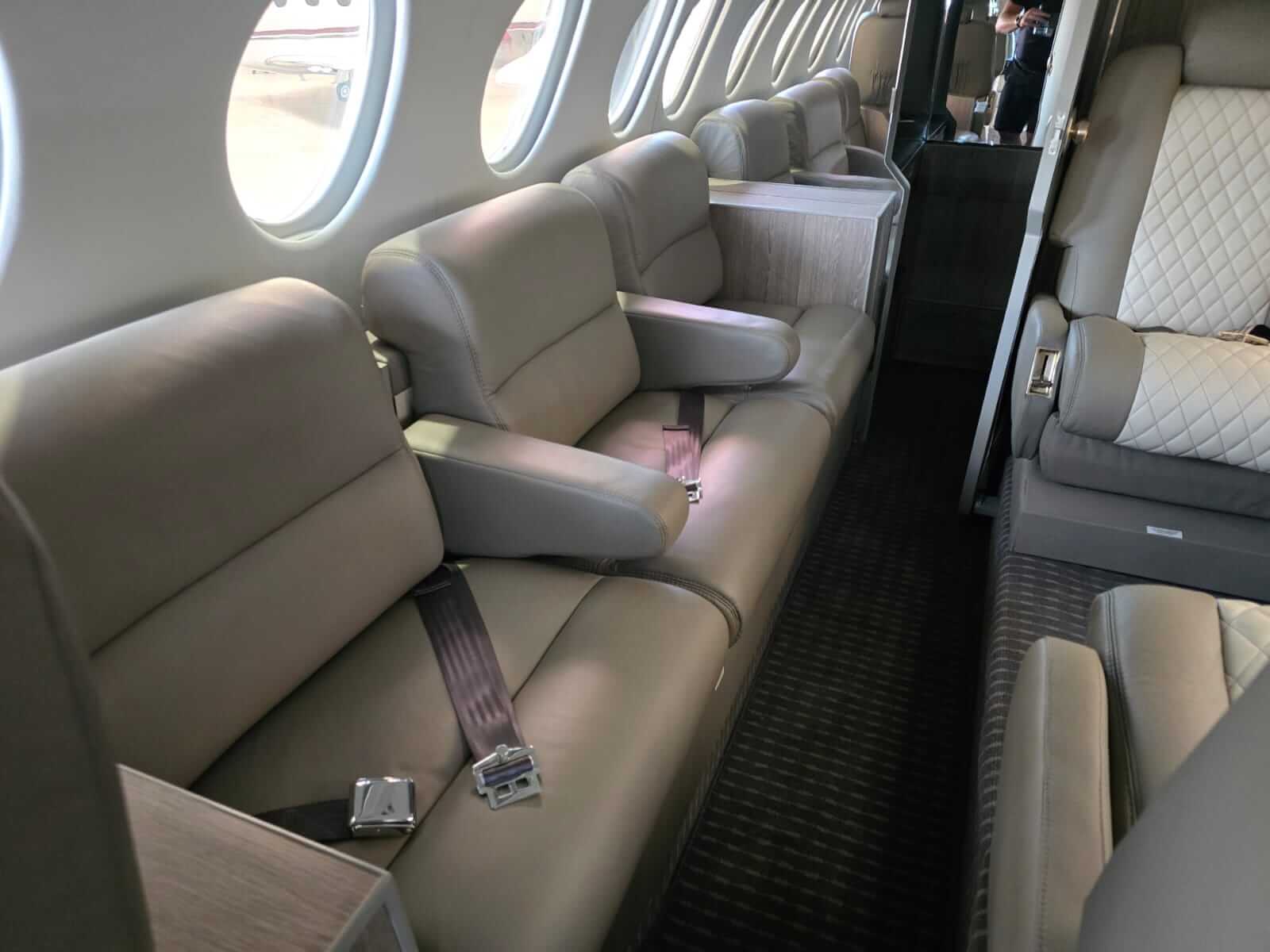
In the world of executive aviation, cabin presentation is not a cosmetic afterthought; it is a core component of asset value, passenger experience and brand perception. Within that cabin environment, seat upholstery is one of the most visible and tactile elements. Re-upholstering aircraft seats is therefore a highly technical exercise that blends aesthetics, ergonomics, regulatory compliance and craftsmanship.
This article outlines how aircraft seat upholstery is undertaken, the principal material options available, and the key considerations for aircraft owners planning a refurbishment.
How Aircraft Seat Upholstery Is Done
Re-upholstery in an executive aircraft is far more complex than re-trimming automotive or marine seating. The process is tightly controlled and must meet stringent airworthiness and flammability standards.
- Initial Survey and Design Consultation
The process begins with a detailed cabin survey. Each seat model, configuration and certification basis is reviewed. Measurements are taken and seat dress covers are assessed for wear patterns, foam condition and structural integrity. At this stage, owners typically work with a design team to define colour palettes, stitching patterns, perforation details, embossing and branding elements.
Material selection is not simply aesthetic; it must align with regulatory standards such as CS-25 or FAR 25 flammability requirements. Any change in material specification may require testing or approved certification data.
- Seat Removal and Strip-Down
Seats are removed from the aircraft and transported to an approved workshop. Each seat is stripped to its frame. Existing dress covers, foams, diaphragms and fire-blocking layers are removed. Seat mechanisms are inspected for wear, and any maintenance issues are addressed in parallel with the cosmetic work.
- Foam Assessment and Replacement
Comfort is driven as much by foam geometry and density as by upholstery. Over time, seat foams compress and lose resilience. During refurbishment, foams may be replaced or re-profiled to improve ergonomics. Modern upgrades can incorporate memory foam layers or enhanced lumbar shaping, provided weight and certification implications are managed.
All foam must meet aviation fire standards and is often wrapped in certified fire-blocking materials before the outer dress cover is installed.
- Patterning and Manufacture
New dress covers are patterned either from the original covers or via digital templating. Precision is critical: tolerances are tight, particularly around armrests, tray tables and integrated seat controls.
Leather hides are inspected and cut to optimise grain consistency and minimise waste. Stitching patterns are executed using aviation-grade threads, and decorative elements such as contrast stitching, quilting or perforation are applied. For fabric options, careful alignment of weave and pattern is essential to maintain a premium appearance.
- Certification and Reinstallation
Before reinstallation, materials must be accompanied by appropriate burn certificates and traceability documentation. If new materials have not previously been approved on that aircraft type, flammability testing may be required.
Once complete, the seats are refitted, torqued and function-checked. A final quality inspection ensures alignment, tension and finish meet both regulatory and aesthetic standards.
Seat Upholstery Material Options
Executive aircraft owners have a wide range of materials available, each with distinct performance and aesthetic characteristics.
Leather
Leather remains the dominant choice in executive aviation due to its durability, prestige and tactile quality. Aviation leather is typically thinner and lighter than automotive leather to reduce weight. Options include semi-aniline, full-aniline and pigmented finishes.
Owners can specify custom dye colours, embossing, laser perforation and bespoke stitching. However, lighter shades may require more maintenance and show wear more readily.
Fabric and Textiles
High-performance wool blends and technical fabrics are increasingly popular, particularly in contemporary cabin designs. These materials can reduce weight and create a softer, more residential aesthetic.
They must be aviation-certified and resistant to abrasion and UV exposure. Fabric is often used selectively — for example, on seat backs or centre panels — combined with leather bolsters for durability.
Synthetic and Performance Materials
Advanced synthetic leathers and performance textiles offer excellent durability and stain resistance. Some are lighter than natural leather and can contribute to weight savings. However, perception of luxury varies, and resale considerations should be evaluated.
Key Considerations for Aircraft Owners
Re-upholstering seats is an investment decision as much as a design one. Owners should evaluate the following factors carefully:
- Regulatory Compliance
All materials must meet aviation flammability standards. Certification, burn testing and documentation are non-negotiable. Working with an approved maintenance organisation or design organisation ensures compliance is managed correctly.
- Weight Impact
Material choice and foam density affect aircraft weight. Even marginal increases can influence performance and operating economics. Conversely, modern lightweight materials can contribute to modest weight savings.
- Durability and Mission Profile
A privately operated aircraft with limited annual hours has different wear characteristics compared with a high-utilisation charter aircraft. Charter interiors typically prioritise darker colours and highly durable finishes to extend refurbishment intervals.
- Brand and Resale Value
Cabin design influences market perception. Neutral, contemporary palettes tend to appeal to a broader resale market. Highly personalised colour schemes may reflect an owner’s identity but could narrow buyer interest later.
- Maintenance Requirements
Light leathers and delicate textiles demand more intensive cleaning and care regimes. Owners should consider long-term maintenance costs and the availability of approved cleaning products.
- Downtime and Scheduling
Seat refurbishment is often coordinated with scheduled maintenance inputs to minimise downtime. Lead times for custom leather dyeing or specialised materials can affect project timelines, so early planning is advisable.
The Bottom Line
Seat upholstery in executive aircraft refurbishment is a specialised discipline that merges engineering, regulatory compliance and high-end craftsmanship. When executed properly, it transforms the cabin environment, enhances passenger comfort and protects asset value.
For aircraft owners, the key is a structured approach: engage experienced aviation interior specialists, prioritise certification and performance, and balance personal taste with long-term operational considerations. To transform the interior of your aircraft today, and re-upholster your seats, speak to the team at Executive Aircraft Refurbishment today.


